Dispatch Digest: week of April 2-8, 2023

Dispatch Digest: week of April 2-8, 2023

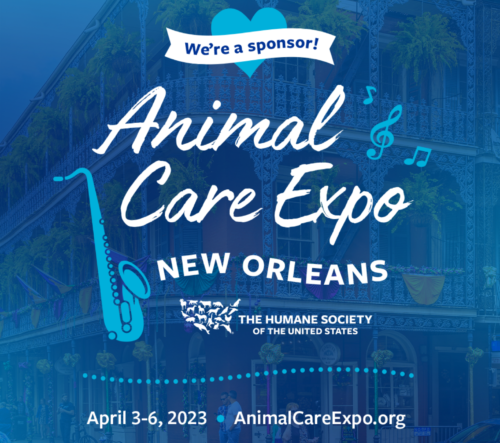
April 3-6: NACA is sponsoring the Field services track at the HSUS Animal Care Expo and will be presenting. Watch our Facebook page for live updates!

UPCOMING TRAININGS:

CONNECT WITH US:

Visit our resource library (for members) is continuing to grow – full of sample SOPs, training videos, operational resources, and advocacy resources.

NACA Circles is a community forum where ACOs can connect and chat with one another.

NACA Statement on Minimum Training Requirements for Animal Care & Control Professionals

It is the position of NACA that every animal control officer should receive, at minimum, the below-outlined training. Requiring minimum training standards will increase safety for officers, animals, and the communities they serve. Furthermore, it is the position of NACA that officers should be required to complete continuing education units to remain relevant and current with national trends and evolving standards.

The recommendations outlined in this document are intended to serve as support to officers and agencies who are advocating for professional development training and funding for training for their officers.

Animal Control Officers (ACOs) perform a variety of services related to pets and people. They work long hours, in dangerous situations, in inclement weather, and oftentimes with inadequate resources, training, and equipment. Animal control officers in most areas are responsible for more than enforcing animal laws; they also assist law enforcement as the animal experts in their community, provide the services of social workers, risk their lives as emergency responders, mitigate community member conflicts, and much more. They work closely with the justice system, including prosecutors and judges, local and state law enforcement agencies, elected and appointed officials, the state veterinarian and health department, the local rabies authority, the fire department, code enforcement, and social services agencies. Although not traditionally classified as first responders, animal control officers perform essential work ensuring public safety for humans and animals.

Animal Control Officers should, at a minimum be trained on:

  • Animal behavior and safe animal handling
  • Communication and de-escalation techniques
  • Public perception
  • Multicultural community engagement; Diversity, equity, inclusion, and belonging.
  • Animal first aid
  • Basic animal investigations including but not limited to:
    • Search warrants
    • Evidence collection and preservation
    • Report writing
    • Courtroom procedures and testimony
  • Animal health including but not limited to:
    • Nutrition
    • Disease recognition, zoonosis, prevention, and herd health
  • Animal husbandry
  • Local, state, and federal laws relating to animal cruelty and neglect.
  • Rabies prevention and processes

In today’s world, it is vital that animal control officers are trained to safely perform their job. Ensuring minimum training standards are met across the nation will help improve accountability, consistency, retention, and reputation, and increase the professionalism of the animal control officer by proactively identifying skill gaps.

NACA recommends when selecting a training vendor other than NACA, that industry best practices are used in helping to determine your selection:

  • Does the training provider understand the culture of today’s animal care and control
    professional and the evolving complexities of the role?
  • What accreditation do they offer?
    • Approval or endorsement by NACA is a stamp of quality.
  • Do the trainers possess the expertise and experience you are looking for?
  • Do they offer multi-channel and innovative learning methodologies?
  • Do they measure progress and record attendance?
  • Can they customize their content to suit your agency’s needs?
  • Ask for recommendations from other trusted professionals.

A list of NACA endorsed training sources can be found on the NACA Training webpage: National Animal Care & Control Association | NACA Professional Development for ACOs (nacatraining.org)

The National Animal Care & Control Association is committed to setting the standard of professionalism in animal welfare and public safety through training, networking, and advocacy.

Dispatch Digest: week of April 2-8, 2023

Why Animal Control? How about Animal Services, Animal Welfare or Animal Protection, etc.?

Why Animal Control? How about Animal Services, Animal Welfare or Animal Protection, etc.? We could still be the dog whipper or the dog collector? Between the 16th and 18th century the dog whipper was employed by churches in England to keep stray dogs away from church gatherings. The dog collector was part of the 1811 “Law Concerning Dogs” in Manhattan. That law was enacted to help “control” the spread of rabies.

The dog collector would collect a $3 tax from the dog owner in the city. Talk about the first dog license! In that time anyone could kill stray dogs outside of the lamp district or any dog suspected of biting someone. By the 1830s the bounty for stray dogs was $1. In 1836, 8000 dogs were slaughtered. At that time most of the dog killers were children and many in of the affluent population were concerned that the children would grow up to commit other crimes. Though it was open season on killing dogs the population of stray dogs continued to grow.

In 1866 Henry Bergh created the American Society of the Prevention of Cruelty to Animals. That began to change the fate of animals in America. You may be asking yourself; what does this have to do with the name, Animal Control? I have gone back and forth on this and even created a list with over 30 names that define our profession. Animal Control is the most common, recognized, understood and accepted name in our profession. The truth is no matter what we are called it comes down to how we interact with our community, that is how we’re remembered.

I found a love for this job in 2009, I became a volunteer at a local animal shelter. A longtime family friend encouraged me to become an animal control officer. I started to do ride alongs and immediately fell in love with the idea of helping animals and people. This job has a purpose! My first job was a seasonal position with a Humane Society. I was an Animal Control & Protection Officer. I was trained by a metalhead who seemed to hate people but like animals. He was and still is an awesome guy but carried himself in way that could rub the community the wrong way. Once you get past the beard and the New York accident you see that he has a big heart and loves the job. The problem is the community only gets to see that on a small scale. I can imagine anyone he has contact with respects him and has a better image of our profession. But if you saw him from afar you may make an assumption which would be incorrect.

The seasonal job came to an end and I joined a local department as an “Animal Control Officer”. The department was under the facilities section of the county. I met with the facilities manager on my first day who was wearing a flannel button up shirt with a red hat that someone contained his mullet. The first thing he said to me was; “so you’re gonna catch dogs for us”.

That was the moment I knew I wanted to help our profession gain the notoriety it deserves. I was floored that the manager of the department that housed animal control was that ignorant. I came into this profession enthusiastic, ambitious, eager and dedicated. I am happy to say that I am still here and promise to keep that energy moving forward.

I have made several sacrifices for this profession and if I was asked to do it all again, I would. I know there are many amazing officers that represent our profession and I am grateful for every single one of you! I am hopeful our paths cross someday so I can give you a hug, fist bump, handshake or just a head nod to thank you for your service. I am grateful for the National Care and Control Association for asking me to write this blog. I appreciate their hard work in helping our profession grow.

In 2019 I was asked to join a podcast called, The Humane Roundup as a guest. They wanted to have me on to talk about my involvement in the community. They saw my social media posts giving matchbox animal control trucks to kids and thought it was a cool outreach item. That was the second (technically third) episode of the podcast. I was invited as a guest and never left! The podcast has now spanned over four years and on January 1, 2023 we changed the name to the Animal Control Report to be more consistent with our listeners. But more importantly to champion the name, Animal Control.

The podcast is hosted by Ashlee Bishop (also a guest at one point) a Humane Officer in Wisconsin and myself. I am an Animal Control Supervisor in Colorado. We have over 158 episodes and have interviewed several amazing guests. Our podcast can be found on Apple Podcast, Spotify, our website (www.humanemain.com) or where ever you listen to podcasts.

Here is a list of my top 10 favorite episodes:

10. Episode 65. What’s in a Name – This episode discusses the different names in our profession and is fitting for this blog.

9. Episode 84. What You Know About Rolling Down in the D – We interview the Director of Detroit Animal Care & Control, Mark Kumpf.

8. Episode 66. We’re Not in Kansas Anymore – KC Pet Project joins the podcast to talk about their operations.

7. Episode 136 & 137. 40 Years in the Field – Lauren Malmberg talks about being in the field for 40 years. That took two episodes as you can imagine there are a lot of interesting things that happen after being in the field for 40 years.

6. Episode 118. City License Check Almost Turns Fatal – This is self-explanatory. Just an amazing episode with Halah Mir.

5. Episode 83. Carol F’n Baskin – Yep, Carol Baskin joins the show and talks about the Big Cat Rescue and more!!!!

4. Episode 79. Hunting Animal Fighters – The legendary David Hunt show to talk about dog fighting.

3. Episode 113. How to Become an Animal Control Officer – We discuss ways to break into the profession as our jobs don’t open that frequently.

2. Episode 87. Take a Bite – Dr. Ian Dunbar joins the show and talks all about bites, his bite scale and more.

Number 1!

Episode 149. The Misconception of PETA – Daphna Nachminovitch, the Senior VP of Cruelty Investigations blows us away with what happens behind the scenes of PETA. There are several parallels between Animal Control and PETA which you can hear on this episode.

These are my top 10 at the moment but the list is always changing. I encourage you to check out the podcast and please join us or send us a topic or guest you’d like to hear on the show. I am always available to help or just to chat with. Feel free to text or call me at 412-736-6263.

Keep it Humane Main! Daniel Ettinger

Thanks to the #realheroes!

Today is the day… a little comic relief is here for animal control officers around the country! NACA is thrilled to be partnering up with @ComedyClubFox as we get ready to show the world the amazing, hard-working, dedicated, and yes, sometimes funny work of animal control!! Don’t miss the premiere of Animal Control TONIGHT at 9 PM ET…we know we’ll be watching!

But before the show airs…FOX Entertainment wanted to give thanks to the #realheroes!

Don’t forget to follow us on our socials (links are all down below) for more surprise content in the future and clips from the show!

And in case you haven’t heard the exciting news:

FOX Entertainment’s first wholly owned live-action comedy, Animal Control is an all-new single-camera workplace series that follows a group of local Animal Control workers whose lives are complicated by the fact that animals are simple, but humans are not. Joel McHale (Community) stars as FRANK, an opinionated, eccentric Animal Control officer who may not have gone to college, but is still the most well-read person in the room. A former cop, Frank tried to expose corruption in his department, but his efforts got him fired, which may explain why he’s so cynical and curmudgeonly. He has an almost superhuman ability to understand animals. Humans…not so much. Frank is assigned a new partner, FRED “SHRED” TAYLOR (newcomer Michael Rowland), an optimistic rookie who used to be a professional snowboarder. They both report into their sweet-natured and endearingly awkward boss, Emily Price (Vella Lovell, Mr. Mayor). Amit Patel (Ravi Patel, Master of None), an overwhelmed family man and Victoria Sands (Grace Palmer, Shortland Street), a free spirit, also are partners and great friends, even though their personal lives could not be more different. Rounding out the precinct is veterinarian Dr. Summers (Alvina August, The Boys), receptionist Dolores Stubb (Kelli Ogmundson, Cavendish) and Templeton Dudge (Gerry Dee, Mr. D), an Animal Control officer from a neighboring precinct with a real chip on his shoulder.

Animal Control is produced by FOX Entertainment Studios and executive-produced by Bob Fisher (Wedding Crashers, Sirens, The Moodys), Rob Greenberg (Frasier, How I Met Your Mother, The Moodys), Dan Sterling (Long Shot, The Interview, Girls, The Office, King of the Hill), Tad Quill (Scrubs, The Moodys) and McHale.

NACA Statement on Support of Updated Association of Shelter Veterinarian Guidelines

NACA Statement on Support of Updated Association of Shelter Veterinarian Guidelines

NACA leadership has reviewed the guidelines for standards of care in animal shelters issued in December 2022 by the Association of Shelter Veterinarians (ASV) and is pleased to provide an endorsement of this robust resource for shelter professionals. This is the first revision of the document, which was originally published in 2010.

At NACA, we feel the most significant updates to the 2022 version of the ASV guidelines center around the need for shelters to manage intake at all costs in order to ensure adequate care can be provided for the animals once they enter the shelter system. While “Both documents share the guiding principle that meeting each animal’s physical and emotional needs is the fundamental obligation of a shelter regardless of the mission of the organization or the challenges involved in meeting those needs”, the Second Edition focuses more heavily on the idea that prevention of intake is the solution to compliance with a capacity of care standards.

Shelters across America, and in particular municipal shelters, are facing an unprecedented disparity between intakes and outcomes, are forced to place incoming dogs in pop-up kennelsin hallways or conference rooms orreturn to the practice of space-based euthanasia (which most had successfully stopped or were on a path to stopping).According to Shelter Animals Count, 4% more animals entered shelters than left in 2022 and this is anincrease of 2% from 2021, the largest gap in the past four years.It is critical that our industry push outmessagesto the public about the necessity to limit intake based on available resources.

According to the new ASV guidelines, “admission must be balanced with the ability to provide appropriate outcomes, minimize LOS, and ensure the shelter remains within its capacity for care. Population management begins prior to admission: an animal must only be admitted if the shelter can provide the care they require.”Contingency plans for temporary/ emergency animal housing in times of capacity crises should be developed and in place if/ when they are needed.

The guidelines go on to state just how critically important it is in the scope of our work that we prioritize the quality of life in the shelter above all else.“Aversion to euthanasia is not an excuse for crowding and poor welfare”. Furthermore, “enrichment must be given the same significance as other components of animal care, such as nutrition and medical care, and is never considered optional.”

In addition to these key takeaways, NACA supports the updated standards of care recommendations and directives detailed in the updated ASV guidelines that cover nearly every aspect of shelter operations and encourages all animal services organizations to review the guidelines in their entirety and comply to the maximum extent possible.

Louisiana Animal Control Association – Interview with Charles “Chip” Fitz

Louisiana Animal Control Association
Interview with Charles “Chip” Fitz
Director, Tangipahoa Parish Animal Control, LA

NACA recently sat down with “Chip”, Director of the Tangipahoa Parish Animal Control in LA and the is the President of the Louisiana Animal Control Association (LACA). LACA was recognized in 2022 by NACA as the State Association of the year and we wanted to share with you some of the brilliant insights he shared with us!

What value does having a state association bring to the members/officers in your area?

There are so many reasons for the association. We strive to raise the level of professionalism throughout the state. In our effort to achieve this, we offer specialized training in things like control pole training, bite stick training, pepper spray use, officer safety, humane trapping, safe handling of animals, report writing, field investigations, cruelty investigations, etc. We work diligently to have a general one-stop training to prepare new officers and kennel personnel alike as well as offer more in-depth training for seasoned officers and kennel personnel. We include topics like disease control, cleaning techniques, core vaccines, etc. However, for me, one of the most important aspects is networking. Networking not only gives local contacts but also boosts morale by being reminded that we are all in this together. It sets an atmosphere of statewide cooperation. I feel that this is one of the biggest assets of the program. We combine our conference with a chemical capture class to offer as much as possible.

What are some of the tips, and tactics that LACA uses to grow its state association?

Each year we try to reach out to all animal services organizations to help to get all included in the training. We offer scholarships for those that cannot afford to attend. We stay in contact with members to try and make sure that we offer training in the areas that are the most needed. We look for venues in different areas of the state and we try to offer some type of after-hours program as well to keep the training as interesting and fun as possible.

What do you think the future of state associations for animal control looks like or what would you like to see?

For the future, I feel that each state having an association is imperative. I would hope that one day we would even be having multi-state conferences where two or more states could combine with workshops on trends within jurisdictions and new strategies toward lifesaving for animals. Sharing success stories and programs that worked on decreasing intakes and on achieving owner compliance. As I mentioned previously this would also be a pathway to networking that would be valuable in times of disaster etc.

How does one become the NACA State Association of the Year? What guidance or advice do you have for other state associations aspiring for this prestigious recognition?

In becoming the Association of the year, the first step would be to make sure that you get nominated. On top of that make sure that you are offering good training in an organized program and working towards helping to raise the level of professionalism in your state. With us, we include NACA registration in our (state association) registration to help keep all attendees connected and informed on the national level as well.

In states with no state association for animal care and control, do you have any guidance on where to start or what they might want to consider/do before starting one?

For the states, without a state association, I would recommend that you attend a full conference of one of the states that do have an association and that is offering annual training. Talk to some of your jurisdictions and see about starting an interest. You could even start by partnering with an existing association for training and to get established before going all in. We periodically get attendees from our adjoining states. Anyone interested in trying to start a state association and training would be welcome to come to observe at one of our annual conferences.

Thank you “Chip”! NACA is honored to have recognized LACA and all the amazing hard work your state association does!