NACA Statement on Breed Specific Legislation

NACA Is Opposed to Breed Specific Legislation

The National Animal Care & Control Association’s fundamental goal is to achieve safe and humane communities; Our priority is safety, first and foremost, in the most effective and most comprehensive way possible. Because everyone benefits from a safe society – both people and pets. Sometimes, however, dog encounters go awry. According to the National Canine Research Council, “96% of dog bite injuries presenting at ER’s are minor – the person is treated and released. Dog bite injuries are among the highest rate of treat and release for any injury tracked by the CDC. Less than 1.5% require hospitalization, unlike injuries in general, which result in hospitalization more than 4 times as often.”

At NACA, we believe our communities can make these unfortunate incidents even less common. However, breed-specific legislation (BSL) or breed discrimination is ineffective as it fails to enhance public safety, is expensive to enforce, and violates the property rights of dog owners. We want our communities to be protected against dangerous dogs – and we want abused dogs to be protected from reckless owners. The focus of any policy should be on the behavior of the dog and the behavior of the owners.

NACA believes that breed-specific legislation (BSL) is breed discrimination and is critically ineffective. BSL fails to enhance public safety, has significant costs associated with enforcement, and violates dog owners’ property rights. Public safety from nuisance or dangerous dogs is a priority, as is protecting dogs from dangerous or harmful owners and thus the focus of any policy should be focused on the behavior associated with such acts.

According to the Animal Legal and Historical Center at Michigan State University, “Breed-Specific Legislation (BSL) is, in simple terms, a statute or regulation that is directed toward one or more specific breeds of dogs. The majority of BSL is focused on breeds traditionally known as “dangerous,” or those that have demonstrated particular propensities for aggression and violent behavior.”

BSL or breed discrimination may include any of the following:

  • Mandatory spay-neuter
  • Mandatory muzzling
  • Liability insurance requirements
  • Special licensing and additional fees
  • Mandatory microchipping or tattoos
  • Owner/walker age requirements
  • Property posting requirements
  • Confinement and leash requirements
  • Breed-specific pet limits sale or transfer notification requirements
  • Restrictions on access to certain public spaces with the dog [e.g.: public parks,
    school grounds]
  • Required town-issued items [e.g.: fluorescent collar; vest]
  • Training requirements
  • A requirement that photos of the dog and/or owner be kept on file as appropriate with the jurisdiction
  • Insurance policies that discriminate against breeds of dogs
  • Housing policies that discriminate against breeds of dogs

NACA agrees with the American Veterinary Medical Association’s statement:

“The issue of dangerous dogs, dog bites and public safety is a complex one. Any dog can bite,
regardless of its breed. It is the dog’s individual history, behavior, general size, number of dogs
involved, and the vulnerability of the person bitten that determines the likelihood of biting and
whether a dog will cause a serious bite injury. Breed-specific bans are a simplistic answer to a
far more complex social problem, and they have the potential to divert attention and resources
from more effective approaches.”

NACA also agrees with the 2012 American Bar Association resolution that:

“urges all state, territorial, and local legislative bodies and governmental agencies to adopt
a comprehensive breed-neutral dangerous dog/reckless owner laws that ensure due
process protections for owners, encourage responsible pet ownership and focus on the
behavior of both dog owners and dogs, and to repeal any breed discriminatory or breed-
specific provisions.”

Rather than implementing BSL, NACA recommends a four-pronged approach provided by the National Canine Research Council to reduce dog bites in communities.

These are:

  1. Focus on the behavior of the dog and the behavior of the owner.
  2. Improved husbandry practices, a better understanding of canine behavior, and
    increasing knowledge of pet owners regarding safety around dogs.
  3. Consistent enforcement of dangerous dog/ dangerous owner ordinances in
    communities.
  4. Effective laws that hold owners responsible for custody and control of dogs
    regardless of breed or type.

References:

Community cost of BSL: https://resources.bestfriends.org/article/breed-specific-legislation-bsl-cost-calculator
National Canine Research Council BSL Q and A:
https://www.nationalcanineresearchcouncil.com/public-policy/breed-specific-legislation-faq
Dog Bites Problems and Solutions:
https://www.nationalcanineresearchcouncil.com/news/newedition-dog-bites-problems-
and-solutions
ASPCA Position Statement on Breed-Specific Legislation: Position Statement on Breed-Specific Legislation | ASPCA
The Humane Society of The United Stated BreedSpecific Legislation: BreedSpecific
Legislation | The Humane Society of the United States
NACA Board Application Process Opens 7/11/2022

NACA Board Application Process Opens 7/11/2022

Application Process Closes On August 11, 2022

BE A NATIONAL LEADER

Serving on the NACA Board is one of the most rewarding ways for you as a Animal Care and Control Professional to bring your expertise to the service of animal care and control at the national level.

Applications to the Board of Directors must be made via the NACA Website Board Election Page

To complete the Board Member Application, the applicant must be an Individual NACA Member in good standing.

The 100-word Statement of Willingness to Serve must be submitted with the Board Application.

The application acceptance process will begin on July 11, 2022 and end on August 11, 2022 at 5pm Eastern

Click Here for Details and to access the Board Member Application.

Humane Highlight – July 2022

Humane Highlight – July 2022

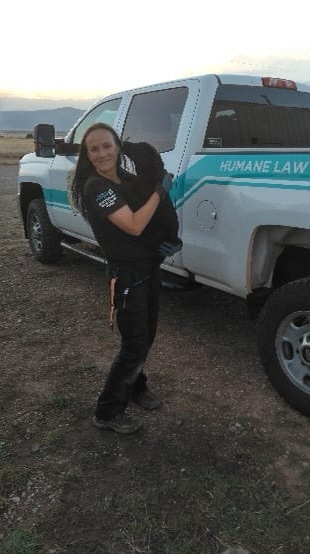
Summer Piper
San Diego Humane Society Emergency Response Team Volunteer 

Summer is a vital member of the San Diego Humane Society’s Emergency Response Team (ERT). She has the role of Lead Scout in the Fire Animal Search and Rescue Team that focuses on evacuating large and small animals from areas that are behind fire lines and currently evacuated as a result of wildfire activity. In addition to assisting with wildfires, she is also active on the Technical Rescue and Water Rescue Teams where she utilizes her high level of training and specialized equipment to extract animals from any type of hazardous scenario or environment. 

When asked about her experience as a NACA member she had this to share with us “NACA provides a way for us to show our determination to animal care and advocacy by living a standard that is regarded amongst our peers and like organizations.”.  

Recognizing the Role of the Animal Control Officer 

NACA Statement on Recognizing the Role of the Animal Control Officer NACA recommends animal control officers receive compensation, training, resources, and equipment necessary to perform the critical services they provide to their communities. 

More specifically, NACA advocates animal control officers be given appropriate humane handling equipment, vehicles in good condition, standardized uniforms, and personal safety equipment. Ideally, animal control officers should also have access to microchip scanners, laptop computers, leashes, collars, pet food, pet supplies, and other resources that enable them to effectively support pets and people in their communities. Finally, NACA recommends agencies review officer compensation to determine if existing salaries are sufficient to recruit and retain qualified and skilled animal control officers.

Animal control officers (ACOs) perform a vast number of services related to pets and people. They work long hours, in dangerous situations, in inclement weather, and oftentimes with inadequate resources, training, and equipment. Animal control officers in most areas are responsible for more than enforcing animal laws; they also assist law enforcement as the animal experts in their community, provide the services of social workers, risk their lives as emergency responders, mitigate community member conflicts, and much more.

They work closely with the justice system, including prosecutors and judges, local and state law enforcement agencies, elected and appointed officials, state veterinarian and health department, the local rabies authority, the fire department, code enforcement, and social services agencies. Although not traditionally classified as first responders, animal control officers perform essential work that ensures public safety for both humans and animals.

Here are just a few of the services provided by animal control officers across the U.S.:

  • Overseeing rabies quarantines
  • Rescuing pets in extreme cold and heat
  • Investigating dangerous and vicious dog cases
  • Investigating dog bites
  • Preventing unnecessary shelter intake and helping reunite lost pets with their people
  • Inspecting pet stores and animal rescues
  • Investigating animal neglect, cruelty, hoarding, and intentional acts of abuse
  • Following up on veterinary and court-ordered inspections of homes
  • Addressing noise and waste complaints
  • Mitigating complaints about outdoor and free-roaming cats
  • Rescuing lost and stray animals that are sick, injured or in immediate danger.
  • Providing food, supplies, and medical support to pet owners
  • Repairing/building fences for dog owners
  • Catching and/or trapping individual loose dogs
  • Assisting pet owners who are in crisis, including incarceration and evictions
  • Responding to emergencies
  • Assisting pet owners experiencing homelessness
  • Managing welfare cases and sick or injured wildlife, exotic animals, and farmed animals
  •  Transporting pets
  • Providing humane education and outreach
  • Provide information to owners on humane pet care
  • Picking up and disposing of deceased animals
  • Supporting community cat programs (TNR and SNR)

In summary, animal control officers today perform a wide variety of functions far beyond the outdated “dog catcher” characterization of the past. They deserve to be properly equipped, trained, and compensated for this complex and difficult work. For a complete listing of the recommended guidelines for animal control officers, visit National Animal Care & Control Association website.

Stay Safe,

Jerrica Owen
Executive Director
National Animal Care & Control Association

NACA endorses New Federal Act for Animals in Disasters!

As disaster season gets more extreme each year and affects millions of people and their pets, NACA wanted to share with all our members an important piece of legislation we are endorsing. We want to make sure all our members were aware of this important federal bipartisan legislation put forth by the Senate Homeland Security and Governmental Affairs Committee, the Planning for Animal Wellness (PAW) Act.

The PAW Act directs the Administrator of FEMA to establish an advisory group with outside experts that will align FEMA guidance to match current best practices in animal care for disaster preparedness, response, and recovery.

This legislation has been carefully reviewed and by endorsed by the International Fund for Animal Welfare (IFAW), the Humane Society Legislative Fund, the Humane Society of the U.S.(HSUS), the Animal Welfare Institute, the National Animal Care & Control Association (NACA), the American Society for the Prevention of Cruelty to Animals (ASPCA), the National Alliance of State Animal & Agricultural Emergency Programs (NASAAEP), and the National Animal Rescue and Sheltering Coalition (NARSC), of which NACA is a proud member of.

This will truly be a unique opportunity for animal welfare groups who have the knowledge and experience, and subject matter experts to help inform FEMA direction and hopefully support stronger responses to animals during disasters!

NACA has a unique role during disasters, our strength is in our membership and being able to help match the needs with the resources. To find out more about how to get involved during times of disaster, please visit our NACA Disaster Portal for links to training, resources, and other disaster related information.

We thank you for your continued support of the profession, the animals, your communities, and NACA – we couldn’t do it without your dedication to the mission!

Stay Safe,

Jerrica Owen
Executive Director
National Animal Care & Control Association

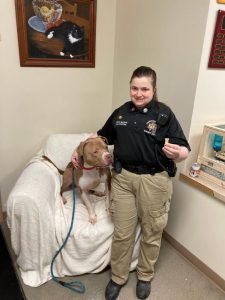
Deputy Angela Walters – NACA’s June Humane Highlight

Deputy Angela Walters – NACA’s June Humane Highlight

Deputy Angela Walters
Cheboygan County Michigan

Deputy Angela Walters is currently one of two deputy Animal Control Officers for Cheboygan County Michigan. Deputy Walters has a bachelor’s degree in Criminal Justice from Lake Superior State University and has been proudly serving her community for the past 15 years.  

In her role she has worked with all kinds of animals including cats, dogs, cows, horses, snakes, pigs, and even a bull. Her office is based out of the Cheboygan County Humane Society where she also helps with filing, data entry, statistics, and whatever else is needed. Deputy Walters is thankful and understand that without the help that the Cheboygan County Humane Society staff she could not do her job to its fullest. When asked about her experience as a NACA members, she had this to say “Being a NACA member has been a rewarding experience for me as I love to learn new things and I have enjoyed many of the training programs that are available through NACA. NACA along with the Justice Clearinghouse have made great strides in helping us ACO’s to improve our game by make training more available for small and/or busy departments to get great education. NACA has helped to ease my mind whenever I start to feel unsure of my knowledge in my field as there is always training available. Thank you so much NACA for all that you do for us ACO’s.” 

When Deputy Walters is not at work, she enjoys spending time with her husband and daughter and help with her high school class board, and really likes to dance, paint and read. Thank you to deputy Walters for all you do for the animals, co-workers, and your community!! We are thankful for your dedication and hard work!