by naca-web | Jun 2, 2022 | Announcements, Blog, Position Statements
[maxbutton id=”2″ url=”https://www.nacanet.org/wp-content/uploads/2022/06/NACA-Statement-on-the-Potential-for-Expansion-of-Courtroom-Animal-Advocates-Program-CAAP-Laws-1.pdf” text=”Download PDF”]
Dear colleagues,
NACA wants to thank you for continuing to go above and beyond every day for the animals and people in your communities. At our very core, NACA envisions a world in which all animal care and control professionals are respected as essential public servants and receive consistent support, resources and training allowing them to effectively and compassionately achieve the highest quality of life for the animals and citizens in the community they serve. Please read below for our most current position statement in response to the potential for expansion of Courtroom Animal Advocates Program (CAAP) Laws. This statement is directly in line with that of NACA’s 44-year-old mission, vision, and values. We are honored to be doing our part to help protect those that protect the animals and people in their communities, the brave Animal Control Professionals. Thank you for all you do!
Background
Courtroom Animal Advocate Program (CAAP) is described as “laws that allow legal practitioners – supervised law students or volunteer lawyers – to advocate for animal victims in criminal cruelty cases. Volunteers appear in court and assist the judge by drafting briefs, conducting research, gathering information from veterinarians, animal control officers, and law enforcement officials, and making recommendations on behalf of the animal victim’s interest.”
These laws are based on Desmond’s Law, passed in Connecticut in October 2016, which allows legal advocates to testify on behalf of animal victims in cruelty and neglect cases. The impacts of these laws have yet to be studied and there is no evidence to show the rates of animal crimes have dropped in Connecticut since the law was enacted in 2016.
There is a likelihood that several CAAP laws will be introduced in multiple states this coming year. These laws have the potential to negatively impact animal control agencies and officers.
Animal Control Officers have historically served as advocates for animals in cruelty and neglect cases and we are concerned these laws have a real potential to further marginalize and silence the voices and experiences of the animal control officers themselves. We believe that adding an external advocate to already-complex cases is likely to lead to a divergence of opinions on what is ‘best’ for the animal victim. It is not clear how the varying opinions of the investigating officer, the prosecutor, and the court-appointed advocate would be weighted.
NACA’s Recommendation
Given the potential negative consequences of CAAP bills, as well as the fact that there is no data to show that CAAP laws achieve their stated purpose, we recommend these laws are carefully studied to determine the impact on animal victims of cruelty and neglect and on the overall welfare of animals. We do not recommend the introduction or adoption of new CAAP legislation at this time, due to this lack of information.
Further, we recommend animal control officers throughout the U.S. are afforded ongoing opportunities to provide meaningful feedback on any bills that will impact animal cruelty and neglect cases in their state.
Animal Control Officers’ Expertise and Experience Should Drive Policy Change
Animal control agencies consistently identify several key challenges related to the successful investigation and prosecution of animal cruelty and neglect cases. These include:
- a critical lack of human and financial resources to adequately investigate and prosecute; and
- a disconnect between animal control officers and the rest of the justice system; and
- a lack of urgency that often results in months to years-long wait for animals in shelter kennels waiting for cases to be heard; and
- a confusing and outdated state and local law when it comes to animal cruelty and neglect.
We ask policymakers to engage with animal control professionals to better understand the issues they face and to create laws and policies to address them.
[maxbutton id=”2″ url=”https://www.nacanet.org/wp-content/uploads/2022/06/NACA-Statement-on-the-Potential-for-Expansion-of-Courtroom-Animal-Advocates-Program-CAAP-Laws-1.pdf” text=”Download PDF”]
With gratitude,
Jerrica Owen, CAWA | Executive Director
National Animal Care & Control Association
by naca-web | May 3, 2022 | Blog, Field Services
Q: Why did NACA write and share this statement?
A: We know that many pets who enter shelters could have been helped in other ways – through pet support services, proactive return-to-home programs, TNR/SNR, etc. Reducing shelter intake by helping solve pet-related problems is good for communities and is the most responsible use of taxpayer funding. In addition, if more pets can be served in their homes and neighborhoods, the animal shelter can provide better care and outcomes for the pets who truly do need to enter the shelter. The result of appointment-based intake should be better service to pets and people in your community. This statement was created to support public shelters in implementing these practices and inform policymakers about the benefits.
Q: Do you believe animal shelters should turn pets away from intake, except in emergency
situations?
A: No. What the NACA statement recommends is that shelters pursue alternative avenues to intake for non-emergency situations and provide a way for people to contact the shelter before bringing in a pet so they can talk with a staff person or volunteer to determine if there is another option for the pet and to make an intake appointment if there is not another viable option.
Q: We have no one on our staff who can answer a telephone or respond to e-mail. Appointment-
based intake seems to rely on a person who can make an appointment. Does this mean we can’t
follow your recommendation?
A: We recognize that not every agency has the privilege to have a dedicated staff member to provide counseling and support and make intake appointments when necessary. If you’re in this situation, you may consider starting a volunteer pet support program, to train and utilize volunteers to provide alternatives to shelter intake to people who come to the shelter. They can even set up a table or work with your admissions staff to help people access resources that can help them keep their pets.
Q: I’m firmly against appointments, but I do support helping people keep their pets out of shelters.
Why is the appointment a necessary part of this?
A: The short answer, is that the act of scheduling non-emergency intake through an appointment system is not the most important part of the NACA statement. However, the appointment system gives the shelter the opportunity to intervene in the intake before the pet and person show up at the door. We know that once people are at the shelter, they have already come to a place of emotional separation that makes it harder for interventions to be effective. In the case of found animals, the animal has also been removed from its neighborhood of origin and the opportunity for a local reunion may have been missed. Ideally, a good pet support system should have remote AND in-person pet support to help people whether they call first or just show up. Appointments are very useful to shelters because they give the organization time to speak with pet owners or finders to get the most important information to prepare for intake of the pet or to help keep the pet in its home or community.
Q: Your statement doesn’t specify how long people should have to wait for an intake appointment.
What is your recommendation about this?
A: It depends, different communities have different thresholds, and some places have intake appointments on the same day whereas, in others, people wait longer to bring in pets. It also depends on the resources you have to manage intake and the capacity of your shelter. During June, when your shelter is 10% above capacity for care, you may ask people to hold pets for several weeks. As always, regardless of how long your intake wait time is, your organization should always immediately accommodate pets who are truly unable to be held and for whom no other viable options exist. Finders and local shelters should work closely with each other to ensure they’re following ordinances and recommendations for giving lost pets the best chance possible before they are rehomed.
Q: If someone cannot make an appointment, and needs to bring a found pet in immediately, do you
suggest we tell people to leave the pet where they found it?
A: It depends. In situations where pets or people are at risk, immediate intake is recommended. Some same day, “pop–up” appointments should be received to accommodate such situations. Where there is no immediate threat, an assessment should be made balancing the risks of admission with the risks of remaining in place. For instance, a dog found running loose on a busy street should be prioritized for admission while a free–roaming cat that has been spotted chronically in the area can generally be safely deferred or redirected to other services.
Q: Won’t fewer people want to help a lost pet if they think they have to hold it instead of being able
to bring it to the shelter? Couldn’t this cause the public to look away and leave needy pets on the
streets?
A: There are many animal shelters big and small, urban, and rural, that have been practicing appointment–based intake for multiple years. There is no evidence to suggest that people are less likely to help a pet if they will be asked to be part of the solution to getting that pet home, rehoming it, or in cases of owner surrender, be given options to keep their pet. Managed admission may actually help shelters reach people who avoided contacting the shelter in the past for fear the pet might be euthanized. Appointment–based intake allows a conversation to take place resulting in a balanced assessment of the needs of the animal, the finder or owner’s ability to participate in solutions, and the shelter’s capacity. Importantly, the shelter must always be available to take in pets when there are no other viable options, or a person is unable or unwilling to help. In the past, people may even have avoided contacting the shelter for fear the pet’s welfare would be compromised. Managed admission allows a conversation to take place resulting in a balanced assessment.
Q: I can understand implementing appointments for owner surrenders, but I don’t agree with stray
finders having to make appointments. Why did you include stray and lost pets in your statement?
A: Recent research has shown that most dogs are found close to home and that dogs are more than ten times as likely to be reunited with their families through neighborhood-based connections versus a call or visit to an animal shelter. Offering even a same-day appointment for finders can provide the opportunity to have a conversation and see if the finder is willing to ask around the neighborhood or take other steps to look for the owner locally before bringing the dog in. Posting on social media or other lost and found website scan result in finding the owner within minutes, in some cases more conveniently and quickly for both parties as well as bypassing a shelter stay for the dog. If the finder is unable to hold the dog for even a short time, an instant appointment can be provided and capacity for these should be ensured.
Q: I heard animal shelters are closing their doors to intake and using your statement to justify this. How would you respond to that allegation?
A: The NACA appointment-based intake statement is intended to help animal services agencies create intake policies and practices that help keep pets with their families and to get more lost pets home faster. It is not the purpose of this position statement to recommend that shelters close to intake by any means, on the contrary, managed admissions and intake by appointment recognizes the critical importance of shelters maintaining the capacity for exigent situations including sick, injured, dangerous,and displaced animals. However, all organizations have an upper limit to their capacity to maintain minimum standards for the safety and health of the animals in their care. In a time of historic staffing shortages, some shelters have been forced to make difficult decisions regarding the types of animals that can be safely accommodated.
Q: What is wrong with just taking in all the pets that come to the door? That’s what we’re mandated
to do so we’re neglecting our duties if we don’t.
A: All organizations have an upper limit to their capacity to maintain safe and healthy conditions for the animals and people in the facility. Like hospitals and veterinary clinics, shelters should exercise a thoughtful process to ensure capacity for exigent cases (sick, injured, dangerous, and displaced animals, owners, or finders in crisis) and provide options for those animals that can’t be immediately accommodated safely.
by naca-web | May 2, 2022 | Blog, Humane Highlights
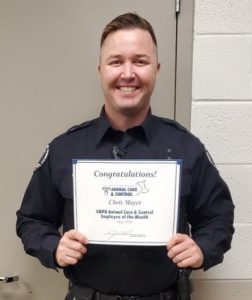
Chris Meyer
Charlotte-Mecklenburg Police Department Animal Care & Control Division
Chris is an enforcement Officer for Charlotte-Mecklenburg Police Department Animal Care & Control Division. He has been in this position for two years. During this period, he has been assigned to several specialized units within the organization from H.A.S.S, Investigations, and E.R.T. His cases range from assisting pet owners within the community in obtaining rabies vaccinations, dog houses, and tethers, to enforcing Animal Cruelty Misdemeanors charges and other City and County ordinances.
Officer Meyer takes pride in serving his community. He believes that enforcement and education go hand in hand to improve animal welfare and community relations. Officer Meyer is passionate about the Organization’s Mission to Animal welfare in both the Shelter and Field environment. He strives to provide support to not only the animals and citizens he serves but also to his coworkers.
Officer Meyer obtained a bachelor’s degree in Criminal Justice from the University of North Carolina at Charlotte. He has also completed the NCAF Animal Welfare Professional Certificate level I to better himself within the profession.
Prior to his employment with Animal Care & Control, Officer Meyer served over 9 years in the United States Marine Corps and deployed four times during his time in the Marines. He is now a Military Police Officer in the North Carolina National Guard. He has deployed twice for Hurricane assistance.
Officer Meyer is a proud dog dad to the Great Pyrenees named “Bear”. When he’s not at work, he can be found on a golf course or cheering on one of his New York sports teams (Islanders, Yankees, Jets). He has adopted the Charlotte Hornets as his hometown team due to his time working as a Guest Experience Supervisor for the Hornets Sports and Entertainment Organization.
When asked Chris said “Being a member of NACA to me means that I am a member of a passionate and professional group of people who truly care about the safety and well-being of animals in the field and shelter settings. As a member of NACA, I have the ability to become technically and tactfully proficient within the Animal Welfare profession to better myself, my peers, and the community that I serve.”
Thank you, Chris, for the amazing work, dedication, and compassion you show every day! NACA is proud to feature you as the May 2022 Humane Highlight!
![Fallen Animal Control Officer Memorial]()
by naca-web | Apr 11, 2022 | Announcements, Blog, Community Outreach, Field Services, News
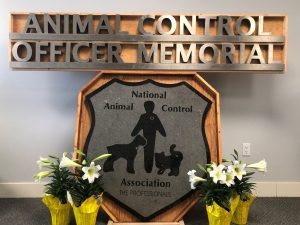 National Animal Care & Control Association (NACA) and Code 3 Associates are proud to announce the re-unveiling of the Fallen Animal Control Officer Memorial. NACA built the memorial to honor Animal Control Officers that were killed in the line of duty. Since moving from its physical headquarters, NACA and Code 3 Associates have partnered to re-erect the monument and we are excited to announce that the memorial will be back on display in late 2022. The NACA memorial, complete with the fallen officers’ names, will be on display at the Code3 Associates Head Quarters in Longmont Colorado for the animal control community to pay respects to the fallen.
#ACOAppreciationweek2022 #nacaaco
by naca-web | Apr 5, 2022 | Blog, Humane Highlights
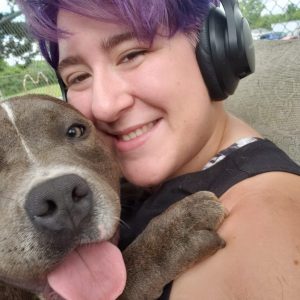
Sam Torres
St. Clair County Animal Control
This month NACA is proud to feature member Sam Torres! Sam started volunteering at St. Clair County Animal Control when she first moved to Michigan. She immediately fell in love with the animals, though she is a dog person she loves all animals! As soon as a position opened for hire, she knew this was the right job for her and applied right away. Sam says “I get so much satisfaction when the animals find homes! I now help to network the animals for my facility and volunteer my photography skills at other facilities to help get animals adopted faster.” Last January, Sam successfully received her ACO certification, although I am still working as an animal care tech, she has amazing plans for the future of her career and animal welfare!
Sam noted “being a NACA member means having access to training and opportunities to help better myself in this field. I love learning more and bettering myself.”
Thank you, Sam, for your hard work, dedication, and compassion for the animals and everyone around you! You are a superstar, and we are proud to honor you as the April 2022 NACA Humane Highlight!
by naca-web | Mar 29, 2022 | Announcements, Blog
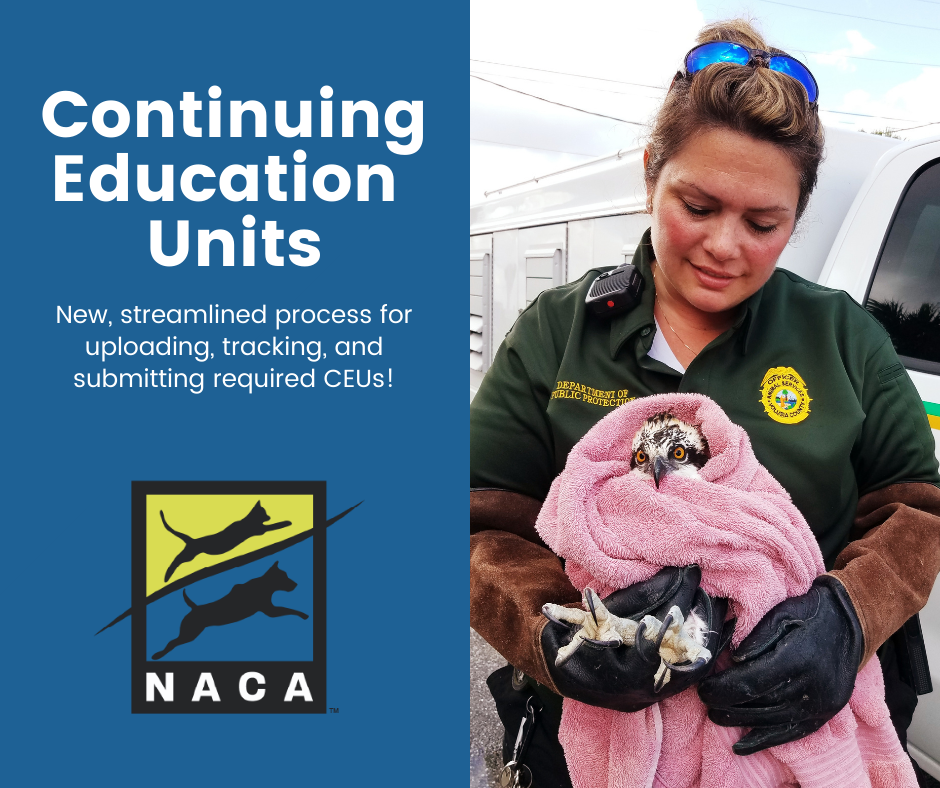
NACA is so excited to share with you that we have updated and streamlined the process for NACA certification holders to upload and track required CEUs.
MEMBERS
We have enabled a CEU tracking feature available in the member portal dashboard – simply log in, upload, and submit! An easy way for you to track, print transcripts, and ensure you are meeting the requirements for recertification!
NON-MEMBERS
The process will remain very similar, the biggest change is that NACA has created a CEU tracking form for you to download and use to track your CEUs. Simply download, fill out the CEU form, and submit via email prior to expiration.
Q: I have never seen the CEU requirements, is this new?
A: No, NACA previously required CEU submission every 3 years to maintain certification in good standing. This change only affects the submission process.
Q: What if I have already submitted my CEUs through the existing website?
A: Any submitted CEUs prior to (3/28/2022) will be automatically added for you, you will not need to re-submit. Non-Members will need to submit the full report upon expiration of the 3-year certification cycle.
Q: What if I have taken but not submitted my CEUS in a few years? Do I have to recertify?
A: No. If you have a record of all your CEUs and submit them via the new process, NACA will offer a 1-year grace period for you to submit your backdated CEUs.
Q: Why a new process, what was wrong with the old process?
A: The new process is streamlined and supports easier tracking for the certificate holder. In addition, this process ensures that Nationally Certified ACOs have the ability to self-report all CEUs and be able to easily access their own personal records.
Q: I need a place to track other CEUs as well (for other NON-NACA certifications), can I use this same tracking feature?
A: YES! This tracking feature is an added benefit for NACA Members and can be used to track all CEU certifications. From this feature, you can export your transcripts and use them however you need.
Q: I am not a member of NACA, can I use the tracking feature as well?
A: No, the tracking feature is only available for members with an active account. The process for non-NACA members will remain very similar to how it is now, with the submission being emailed. Non-NACA members can access the excel template from our website in which to track CEUs and will be required to submit via email.
Q: What if I have never completed any CEUs, is my certification still valid?
A: No, NACA previously required CEU submission every 3 years to maintain certification in good standing. If you have no record of any CEUs you will need to recertify. Email us if you have questions or want to talk about your specific situation, we are happy to connect!
Q: My department doesn’t have the budget for travel currently so I may not be able to meet the requirements, how will I get my CEUs?
A: The limits posted in the policy are the maximum limits allowed in any one area and there is no requirement that the training be in person. There is not a minimum and the CEUs can be a mixture of items to equal 30 total, 10 per year. In addition, the core competency areas were added to expand the types of training that an officer can do that would count as an approved CEU. An example is below.
Year 1: 10 CEUs webinar
Year2: 5 other, 5 online
Year 3: 5 webinars, 5 other, or any combination thereof
Have additional questions? Feel free to reach out to us! We thank you for your commitment to continuing to set the standard and lead the way in animal care and control!